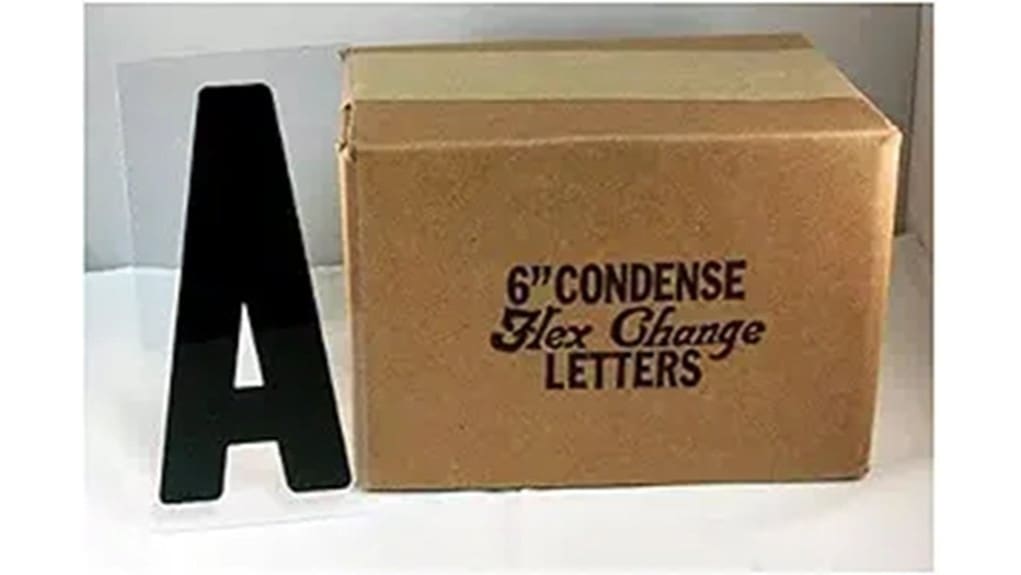
These 6″ on 6 7/8” flexible marquee letters are thin 0.030″ UV-stabilized PVC on clear backs that bend to shallow tracks, so you’ll swap messages faster and fit more characters on tight-height boards. They’re lighter and cheaper than rigid acrylic and pack well for frequent updates, but they won’t match acrylic for long-term impact or sun resistance. Test fit with a 6 7/8″ poster card and store flat; keep going and you’ll see practical fit, care, and buying tips.
Some Key Takeaways
- 6″ condensed letters on 6 7/8″ clear 0.030″ PVC backs fit shallow open tracks and pack densely for portable roadside signs.
- Flexible, credit-card-thin PVC lets letters bend into shallow tracks for faster, lower-labor message changes.
- UV-stabilized 0.030″ PVC resists fading short-term but will dull edges faster than thicker rigid acrylic over years.
- Best for frequent updates and temporary/portable use; rigid acrylic is better for permanent, impact-prone installations.
- Test fit with a 6 7/8″ poster-board card, store flat and shaded, and order by box size matching turnover needs.
What These 6″ on 6 7/8″ Flexible Letters Actually Are and Who They’re For
Although they look simple, these 6″ letters on 6 7/8″ clear backs are purpose-built flexible marquee characters for portable roadside signs, and they’ll suit you if you need high-visibility, frequently changed messages. You’ll find them minimalist yet engineered: 6″ condensed characters on thin 0.030″ UV-stabilized backs designed for repeat repositioning. Compared to rigid acrylic, they bend and seat faster, boosting installation speed and lowering labor. Your audience profile is practical—operators who prioritize quick updates, space efficiency, and durability without heavy hardware. If you value iterative messaging and low-friction changeovers, these letters offer a modern, efficient alternative to bulkier systems. They’re ideal for users selling products and services related to outdoor signs who want to showcase creative outdoor sign solutions that are easy to update.
Will They Fit Your Sign? Quick Compatibility Checklist and Measurement Test
If you like the speed and flexibility of these 6″ on 6 7/8″ letters, the next question is simple: will they fit your sign? Measure your track depth and compare to 0.030″ PVC; the track must accept thin flexible backs. Cut a 6 7/8″ poster board test panel to verify height and clearance. Check that your sign uses open changeable tracks (not behind doors, covers, or poles). Evaluate letter curvature against existing letters—condensed, flexible letters bend more, so they’ll hug shallow tracks better than rigid styles. If they align, you’ll gain faster, denser messaging without hardware changes. For design ideas and mounting tips, consider browsing slide-in letter track resources.
Build Quality and Usability: Material, Longevity, and Weather Resistance
Because these letters use 0.030″ UV-stabilized PVC, you’ll get a very flexible, credit-card-thin backing that holds up better than untreated plastics but won’t match the stiffness or decades-long fade resistance of thicker acrylics. You’ll appreciate the lightweight feel and easy repositioning for rapid message changes. Expect reasonable resistance to UV degradation thanks to stabilizers, though prolonged sun exposure will still dull edges faster than rigid options. For maintenance, follow gentle cleaning methods—mild soap, soft cloth, no solvents—to avoid scratching the thin face. Overall, innovation-focused users gain portability and cost-efficiency at the expense of ultimate longevity. These kits are designed specifically for outdoor signage with weatherproof letter kits to help your messages endure the elements.
Practical Pros and Cons: When to Choose Flexible Letters vs Rigid Options
When you need speed, portability, and lower cost, flexible marquee letters outshine rigid options: they bend into tracks, let you change messages quickly, and let you fit more characters on a limited-height board. You’ll favor flexible letters when Installation speed and frequent updates matter — they’re lightweight, pack densely, and reduce labor. But expect Durability tradeoffs: thin 0.030″ PVC resists UV briefly but won’t match acrylic rigidity for long-term exposure or vandal-prone sites. Choose rigid letters for permanent, high-visibility placements where stiffness, weather resilience, and impact resistance justify higher cost and installation effort. Optimize by matching material to use cycle. For outdoor displays consider weather-resistant materials and best practices for letter maintenance to extend service life.
Buying and Use Tips: Ordering Quantities, Cutting Test Cards, Storage, and Repositioning Techniques
While ordering, think in sets rather than singles so you don’t run out mid-season: buy full boxes (250 letters) for high-turnover signs and smaller refills only for occasional updates, since condensed flex letters pack tightly and are cheapest per unit. Test fit by cutting a 6 7/8″ poster-board card to validate track compatibility before bulk buying. Store letters flat, cool, and away from sunlight to preserve letter care and UV stabilizers. For repositioning, bend gently and slide—flex material tolerates repeated moves better than rigid stock. Compare storage trays and magnetic strips; choose the placement strategy that speeds swaps and minimizes wear. Swapable sign boards make seasonal updates fast and efficient, especially when organized with storage trays.
Some Questions Answered
Are Replacement Letters Sold Individually or Only in Boxes of 250?
They’re only sold in boxes of 250, not individually. You’ll appreciate bulk pricing if you frequently change messaging, and custom orders are available if you need different colors or quantities. Compared to buying singles, the box model lowers per-letter cost and speeds swaps but requires upfront inventory. If you want flexibility, request a custom order for smaller runs or unique styles; otherwise, the 250-pack is the standard, cost-efficient choice.
Do Letters Come in Colors Besides Black?
Yes — you’re not limited to black. The letters come primarily in black but Sign Letter Depot offers additional color options and can discuss custom finishes for specialized needs. You’ll evaluate trade-offs: stock colors give quick availability, while custom finishes add branding and UV protection but cost more and take longer. If you want innovation, weigh faster turnaround against tailored color matching and enhanced durability when choosing.
Can Letters Be Used Indoors on Smooth Walls or Glass?
Yes — you can use these letters indoors on smooth walls or glass, but choose mounting carefully. They’re flexible and repositionable, so they outperform rigid letters for temporary displays. For best results, pair them with wall safe adhesives or glass friendly mounting solutions to avoid residue or damage. Compared to tapes or heavy adhesives, low-tack options preserve surfaces while still holding letters securely, supporting innovative, changeable indoor signage.
Is There a Warranty or Satisfaction Guarantee?
Yes — you get a limited warranty and a money back option for defects or dissatisfaction. You’ll find the coverage basic but reliable compared with no-warranty alternatives; claim processes are straightforward, though not as generous as premium brands. If you value innovative, adaptable signage, this balance of protection and return flexibility is practical. Check manufacturer terms for time limits and exclusions so you’re not surprised when you need a replacement or refund.
Are Adhesive Options Available for Non-Track Signs?
Yes — you can use alternative mounts. You’ll find magnetic backing, peel stick, weatherproof mounting, and custom adhesives to adapt these flexible letters to non-track signs. Magnetic backing’s fast and removable, peel stick’s cheap and simple, weatherproof mounting handles outdoor exposure, and custom adhesives suit unusual surfaces. You’ll want to compare hold strength, residue, and reusability for your application and pick the innovative option that balances flexibility with durability.