You’ll get a slim 77″ x 14″ PH10 LED sign that’s bright, low‑power, and easy to update via Wi‑Fi or USB. It uses SMD LEDs and an aluminum frame with IP45 protection, so it handles semi‑exposed installs better than bulkier indoor boards. Setup is straightforward: copy files over USB or push content and schedules over Wi‑Fi, but change defaults and keep firmware current for security. It’s ideal for retail promos and cafés — more details follow if you want.
Some Key Takeaways
- 77″ x 14″ PH10 panel offers 192×32 resolution with vivid full-color display and smooth adjustable scrolling.
- Dual upload methods: USB for local file copies and Wi‑Fi for remote updates and scheduled content.
- Slim aluminum frame with IP45 rating withstands light rain and semi-exposed locations, not fully outdoor.
- Efficient SMD LEDs provide high brightness, low power draw, and conservative thermal performance.
- Recommended for retail, cafés, and lobbies needing frequent updates; avoid where ultra-fine resolution is required.
What This 77″ X 14″ Wifi & USB LED Sign Actually Is (Key Specs and Features)
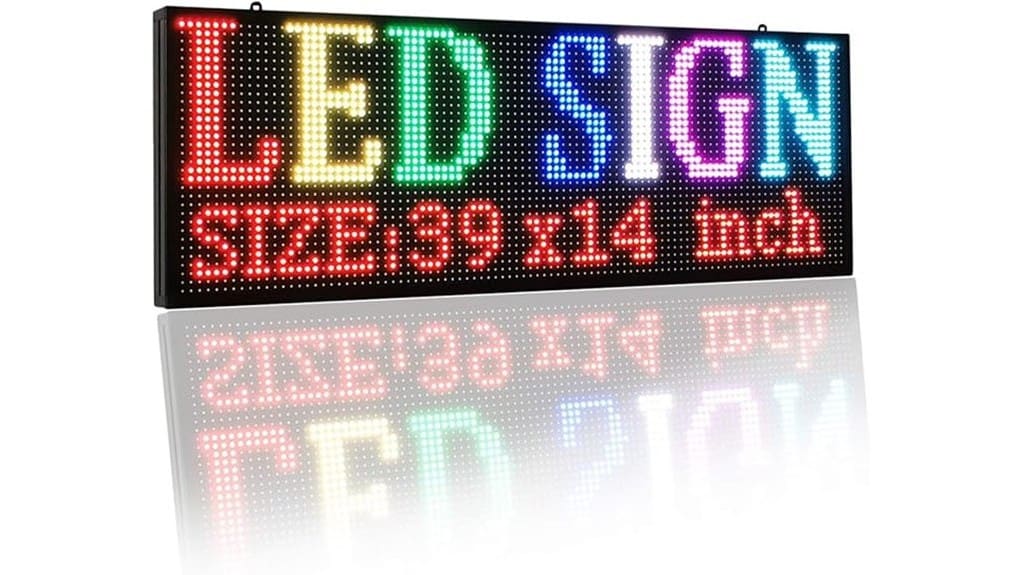
Although it looks simple, this 77″ x 14″ Wi‑Fi/USB LED sign is a full-color PH10 panel that gives you a 192 x 32 resolution canvas for scrolling text, images, videos and dynamic effects. You’ll get SMD LEDs and efficient chips that deliver high brightness with low power consumption, so energy efficiency beats older displays. The aluminum frame and IP45 rating mean indoor/outdoor flexibility without bulky housings. Compared to bulky boards, it’s slimmer, lighter, and easier to place. You’ll appreciate programmability for dynamic messaging plus accessibility features like adjustable brightness and clear, high-contrast text for wider audience reach. The site also offers a range of backlit letter board accessories for customers who use signs to share a message, including mounts and replacement letters for added customization and durability (backlit letter boards).
How Setup and Programming Work With WiFi and USB (Step‑by‑Step)
When you unpack the sign, you’ll find setup splits into two straightforward paths—USB for quick, local uploads and Wi‑Fi for ongoing remote updates—so decide whether you’ll mostly update on-site or want the flexibility of network control. For USB: connect the controller, copy compiled message files from the included software, and test playback—fast, airgapped, ideal for simple rotations. For Wi‑Fi: join the sign to your network, use the web/desktop app to push content, and set schedules. Prioritize wireless security—change default passwords, enable network isolation. Check and apply firmware upgrades when available to keep features and protections current. Use design best practices for eye-catching messages to make the most of your programmable sign.
Real‑World Performance: Brightness, Color, Scrolling, and Power Use
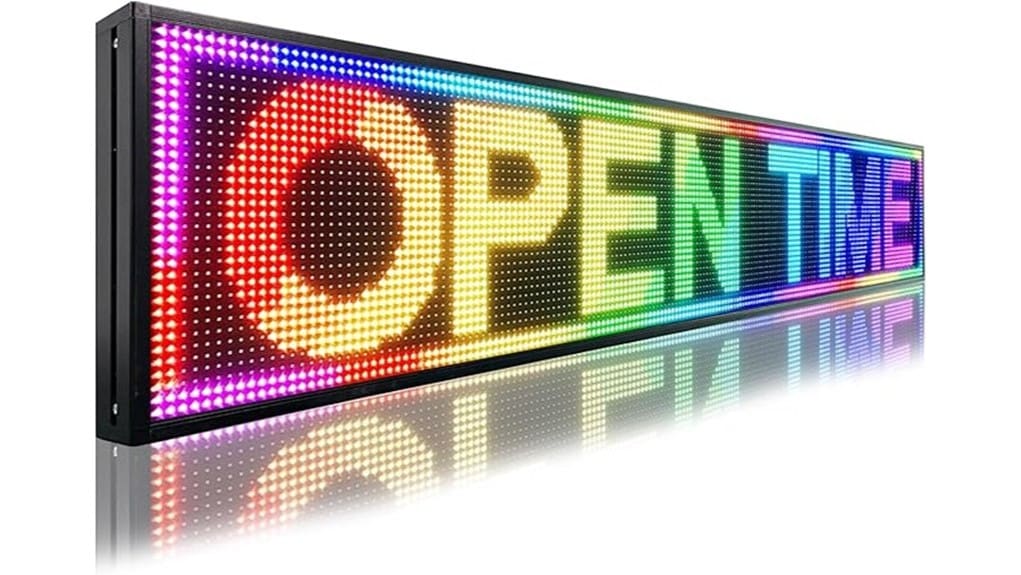
With your sign online or loaded via USB, you’ll quickly notice how it performs in real settings: brightness holds up even in daylight, colors stay vivid, and scrolling remains smooth without stutter. You’ll judge output against ambient lighting — indoors it’s punchy, outside it competes with sunlit storefronts. Color fidelity beats older PH10 panels; gradients and logos look accurate. Scrolling speed options let you prioritize readability or motion; even long strings remain legible. Power use stays low thanks to SMD efficiency, so runtime and thermal behavior are conservative. Keep firmware updates current to maintain performance and fix occasional glitches. For outdoor displays consider pairing with durable UV-resistant letter sets to ensure signage longevity in sunlight.
Durability and Installation: Build, Weather Rating, and Mounting Options
Because the sign uses an industrial‑grade aluminum frame and robust components, you’ll get a build that feels solid and resists warping or corrosion over time. You’ll appreciate the IP45 rating for semi‑exposed locations; it won’t replace sealed outdoor fixtures but outperforms typical indoor displays. Installation is straightforward: modular panels simplify wiring and service, and weatherproof fasteners keep seams tight under wind and light rain. Mounting options—wall, ceiling, or counter—are practical and adaptable, letting you prioritize sightlines and power access. Compared to fragile rivals, this sign balances ruggedness and modularity for forward‑thinking deployments. These features make it an excellent companion for users who also rely on weatherproof letter kits to create durable, changeable outdoor messages.
Who Should Buy It and How It Compares to Alternatives (Value and Use Cases)
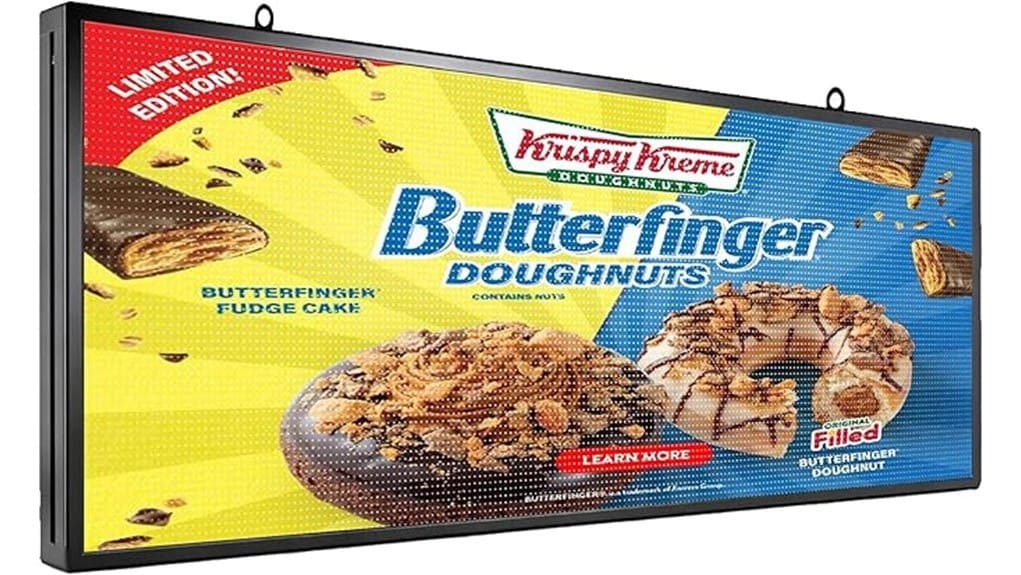
If you need a bright, programmable sign that looks professional without breaking the bank, this model fits small-to-medium retail, cafés, lobbies, and event booths that want high-impact messaging and low maintenance. You’ll want it for restaurant promotions and retail storefronts where visibility, energy efficiency, and easy updates matter. Compared with static signs or pricier indoor LED walls, it balances cost, brightness (PH10), and programmability via Wi‑Fi/USB. Choose it if you need quick message changes, low power draw, and IP45 durability. Skip it if you require ultra-fine resolution or large-scale video walls for immersive branding. Many buyers prefer outdoor visibility letters for complementary signage when using LED signs in storefronts, as they enhance legibility and brand presence with outdoor contrast.
Some Questions Answered
Does the Sign Include a Warranty and What Does It Cover?
Yes — you get a manufacturer warranty; it covers defects in materials and workmanship for a defined period. You’ll find Warranty details and Coverage terms in the package and manual; they typically include panel failures, LED module defects, and power supply faults, but exclude physical damage or improper installation. You can compare extended plans for longer protection. If you spot issues, contact support promptly and follow their repair or replacement process.
Can Multiple Signs Sync Content Wirelessly Together?
Yes — you can sync multiple signs wirelessly for coordinated displays. You’ll set up wireless choreography so each unit follows synchronized playlists you create in the software. Compared to standalone signs, this gives consistent messaging across locations, timed effects, and seamless shifts. You’ll appreciate the hands-on control: configure group modes, test sequences, and update content centrally. It’s ideal when you want innovative, polished multi-sign campaigns without manual syncing.
Is There a Mobile App for On‑The‑Go Programming?
Yes — you can control it from your phone. You’ll get mobile control that mirrors the desktop software, letting you update messages, schedule playlists, and preview layouts. It also supports offline editing so you can craft content without Wi‑Fi and sync later. Compared to desktop-only systems, this gives faster adjustments, greater flexibility on site, and a clear edge for innovative teams who need real-time, portable sign management.
What Are the Recommended Cleaning and Maintenance Procedures?
You should perform daily dusting with a soft microfiber to keep LEDs bright and reduced heat; avoid sprays. Do a periodic inspection weekly for loose mounts, corrosion, and water ingress; compare connector pins and cables to original specs. Every few months power down for a deeper clean with compressed air and check seal integrity. If you spot irregularities, troubleshoot firmware and hardware immediately or contact support to prevent downtime.
Are Replacement Parts and Technical Support Available Locally?
Yes — you can get local vendors and spare components for repairs and upgrades. You’ll find authorized dealers who stock common spare components and provide on-site technical support, plus independent shops that offer faster turnarounds and lower costs. Compare warranties, response times, and component authenticity. If you want innovation, pick vendors that offer firmware updates and modular parts so you can upgrade brightness, control boards, or networking without full replacement.