You’ll want a programmable outdoor LED sign that balances brightness (up to ~5000 nits) with pixel pitch so text stays legible at your target viewing distance, usually clear to ~60 ft with typical matrices. Check IP65, −20° to +60°C ratings, sealed connectors, and aluminum frames for continuous outdoor use. Prefer Wi‑Fi control, scheduling, OTA diagnostics, and storage for ~100 campaigns. Scan vendor sight‑line charts and calibration tools to match site conditions and learn next steps.
Some Key Takeaways
- Match pixel pitch and matrix (e.g., 64×32 vs denser panels) to intended viewing distance for readable text and graphics.
- Prioritize peak brightness (up to 5000 nits) and dynamic dimming to maintain contrast in direct sunlight and night.
- Verify outdoor durability: IP65 rating, −20 °C to +60 °C operating range, sealed connectors, and corrosion-resistant frame.
- Confirm connectivity and control: built-in Wi‑Fi, scheduling, OTA updates, content storage (≈100 programs), and encryption.
- Check vendor support: templates, multilingual options, measured sight-line charts, installation guides, and after‑sales maintenance.
Essential Features to Evaluate in Programmable Outdoor LED Signs for Business
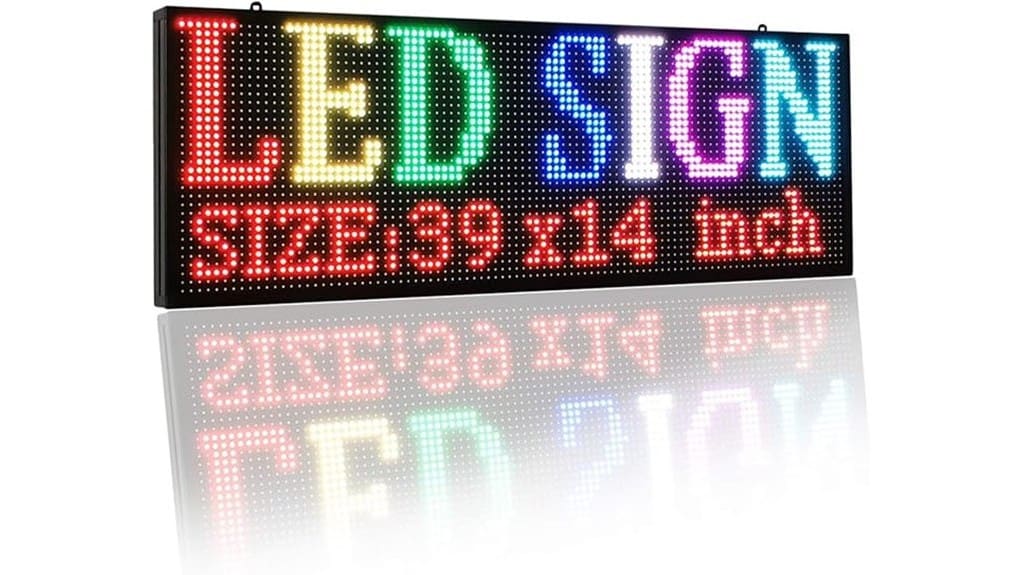
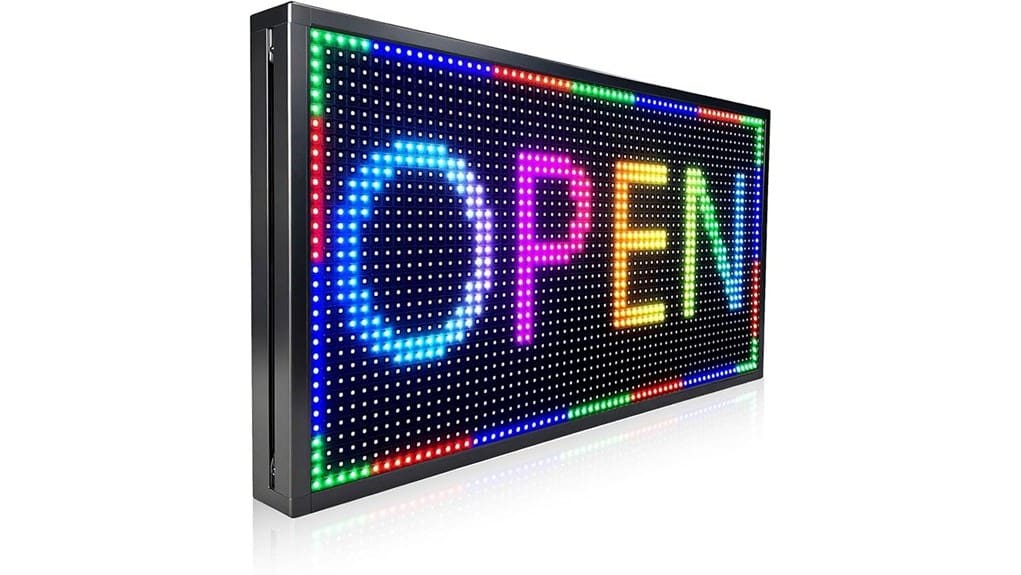
When evaluating programmable outdoor LED signs for your business, focus on measurable specs that affect visibility, durability, and operational control: pixel matrix (64×32) and 2048 high-brightness LEDs determine image clarity, peak brightness (up to 5000 nits) and viewing distance (clear to ~60 ft) dictate placement, and IP65 rating plus a −20 °C to +60 °C operating range guarantee reliable 24/7 outdoor performance. You’ll value built-in WiFi, remote programming, timer switch, and software updates for agile content. Prioritize color calibration capability, precise font/scroll controls, storage resilience, and energy monitoring with scheduling to cut consumption while maintaining impactful, measurable outdoor presence. Durable waterproof sign letters provide clear, weatherproof messaging options that complement LED displays.
How Brightness, Pixel Matrix, and Viewing Distance Affect Real‑World Visibility
You’ve already noted specs like pixel matrix, LEDs, and nits—now focus on how those numbers interact in the field. You’ll judge visibility by balancing brightness and pixel pitch: higher nits combat ambient glare but can wash fine detail if pixel pitch is wide. Use pixel matrix density to predict character legibility at target viewing distance; tighter pixel pitch yields crisper type for close-up storefronts, while larger pitch suits long-range roadside signs. Measure perceived contrast under real lighting and tune brightness dynamically. Vendors should provide tested sight‑line charts so you can match pitch, matrix, and nits to actual site conditions. Consider also using weather-resistant letters on physical sign faces where you pair digital inserts with durable, outdoor lettering to extend message life.
Connectivity, Control, and Content Management: Wi‑Fi, Software, and Scheduling
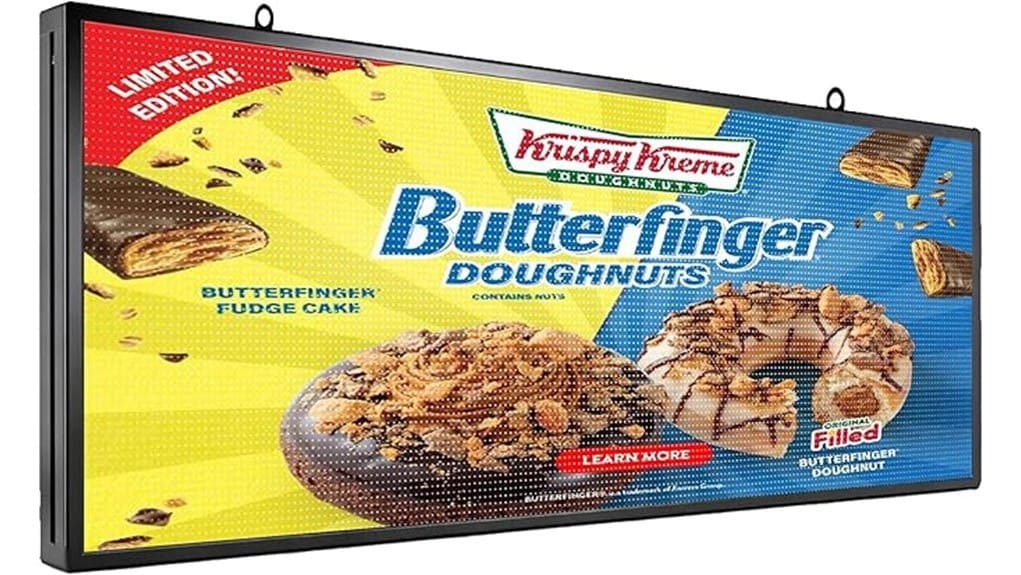
Tap into the sign’s built-in Wi‑Fi to manage displays locally—no internet required—and push updates from a phone or computer within roughly 30 feet. You’ll run vendor software to create programs, schedule playback, and store up to 100 campaigns with power‑off protection. Use timer-switch functions to cut runtime and energy costs. Expect OTA-style remote diagnostics for fault detection and firmware checks when connected to a network, plus local encryption of content and credentials to meet basic security needs. The workflow supports multilingual content, rapid A/B testing, and precise scheduling so you can optimize messaging and measure operational uptime. Many customers also use vendor-provided templates and best-practice design guidance to create eye-catching messages for their signs.
Durability and Outdoor Readiness: IP Rating, Temperature Range, and 24/7 Reliability
Because outdoor signs face rain, snow, heat and cold, this model’s IP65 waterproofing, -20 °C to +60 °C operating range, and continuous-duty design give you predictable, 24/7 reliability. You get multi-layer weatherproof coatings, sealed connectors, and corrosion-resistant aluminum that sustain 5,000-nit LEDs through storms and sun. Data shows consistent output across the stated temperature band with minimal thermal throttling. For uptime, follow vendor-recommended maintenance schedules: quarterly inspections, gasket checks, and firmware updates. That proactive regimen minimizes downtime and protects stored programs. If you prioritize resilient, always-on messaging, this unit delivers measurable outdoor readiness and operational efficiency. Protect your investment with weather shields designed specifically for sign durability in harsh conditions.
Installation, Customization, and Support: Mounting Options, Program Storage, and After‑Sales Help
When planning installation, consider the two supported mounting methods—hanging or wall-mount—with a lightweight aluminum frame that simplifies handling and lets you use third‑party brackets for custom setups. You’ll connect via built‑in Wi‑Fi (30 ft range) and upload content with downloadable software; storage holds 100 programs with power‑off protection. Customize fonts, colors, brightness (up to 5000 nits) and scroll modes; supports 14 languages. Use third party accessories for specialized mounts or enclosures. Schedule operation with energy saving timers and remote updates to reduce runtime. Manuals, videos, and professional after‑sales support speed deployment and troubleshoot field issues. Our sign designs follow best practices for clear room messaging and visibility, informed by conference room sign guidelines.
Some Questions Answered
Can the Sign Display Live Social Media Feeds or Dynamic Web Content?
Yes — you can display live feeds and dynamic web integration, but with limits. The sign supports remote updates via downloadable software and built-in WiFi (30 ft range), so you’ll push web-based content or scheduled pulls. It doesn’t natively run full browser widgets; instead you’ll configure APIs or server-side feeds to format content into supported programs. This approach preserves reliability, storage protection, and predictable refresh rates for mission-critical displays.
What Power Consumption and Energy Costs Can I Expect Monthly?
Expect roughly 30–60 W average draw (300–600 Wh/day) depending on brightness and duty cycle; that’s about 9–18 kWh/month. At $0.15/kWh you’ll pay $1.35–$2.70/month in energy estimates. Factor in occasional higher use for full-brightness campaigns. Maintenance costs are low — routine cleaning, firmware updates, and occasional sealing or LED module replacement could average $50–$150/year. Budget for periodic professional checks if mounted high.
Is the Display Vandal- and Theft-Resistant for High-Traffic Areas?
Yes — you’ll get strong protection: the unit uses tamper resistant housing and reinforced mounting to deter vandalism and theft. The aluminum-alloy frame plus IP65 sealing sustains impacts and weather; mounting options include secure wall-mount anchors and hanging brackets compatible with third-party security hardware. You’ll want padlocks, tamper screws, and surveillance integration for high-risk sites; combined they deliver a rugged, vendor-grade solution for busy urban installations.
Are There Warranty Options and What Do They Cover?
Yes — you’ll get standard and extended warranties; extended warranties add 1–3 years of parts and labor coverage. Transferable coverage is available so you can preserve value if you sell the sign. Warranties typically cover LED modules, power supplies, and controller failures, excluding physical vandalism and improper installation. You’ll receive clear RMA procedures, response SLAs, and optional on-site repair or replacement plans for faster uptime.
Can Multiple Signs Be Synchronized for Coordinated Messaging?
Yes — you can sync multiple signs for coordinated messaging. You’ll control color harmony and timing via the software’s schedule zones, pushing synchronized playlists and matched RGB profiles across units. The system supports remote updates, timed triggers, and program storage for up to 100 campaigns. You’ll get precise brightness and scroll-rate alignment, IP65 reliability, and vendor-grade support, letting you deploy consistent, innovative outdoor displays with centralized management and fail-safe power-off protection.