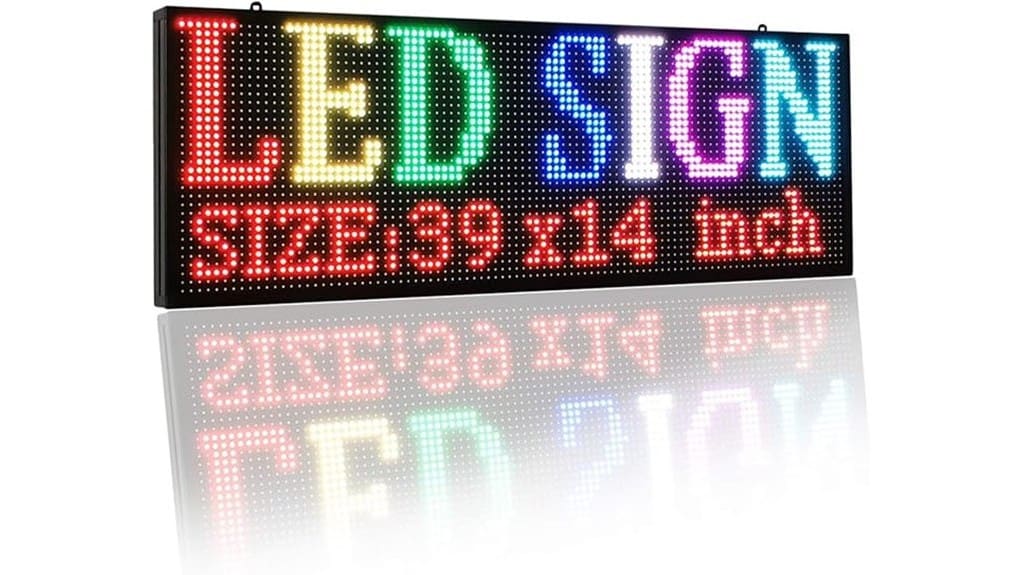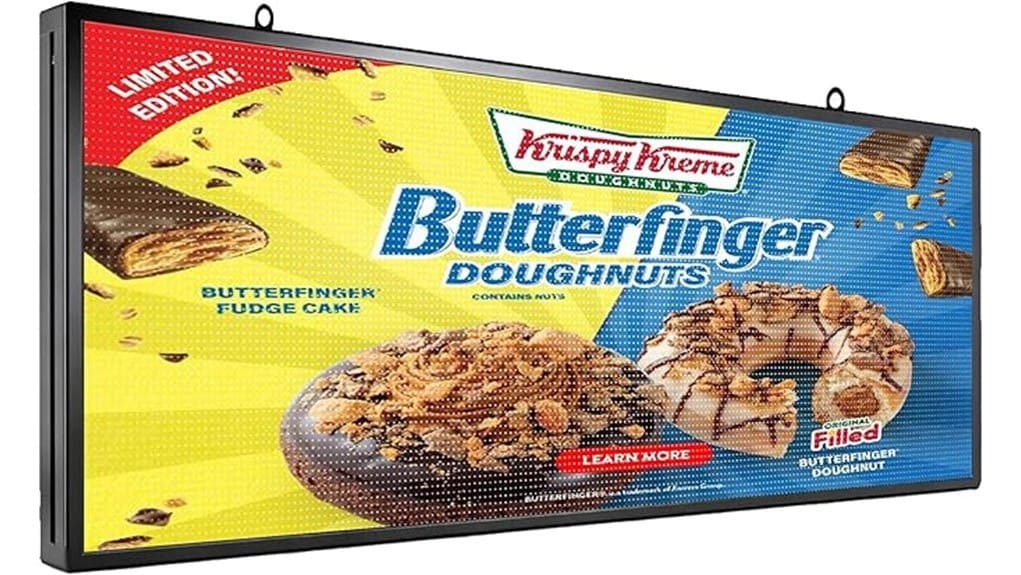
You’ll get a practical evaluation of video LED signs that explains how tiny LEDs form frame-by-frame images and why resolution, pixel pitch, and brightness determine legibility and color fidelity. You’ll learn which specs to prioritize for retail (high pixel density, color accuracy), outdoor (high nits, IP-rated cabinets), and events (lightweight, flexible pitch), plus real-world tests for motion, audio sync, power draw, and thermal stability. Scroll on and you’ll find installation, remote management, and buying guidance.
Some Key Takeaways
- Check pixel pitch versus intended viewing distance: tighter pitch for close retail, looser acceptable for distant outdoor signs.
- Prioritize brightness (nits), contrast, and IP-rated cabinets for outdoor legibility and weather resistance.
- Evaluate color accuracy, thermal stability, and calibration to maintain brand colors during long playback.
- Confirm playback options (USB/SD/Ethernet), remote management, scheduling, and multi-zone layout support.
- Review warranties, power consumption, modular serviceability, and real-world tests for sharpness and playback stability.
How Video LED Signs Work and Why Resolution, Brightness, and Pixel Pitch Matter
When you view a video LED sign, tiny light-emitting diodes form a precise grid that your content drives frame by frame, so resolution, brightness, and pixel pitch directly determine image fidelity and legibility. You evaluate systems by matching pixel pitch to intended viewing distance: tighter pitch for close inspection, wider for long-range. Measure resolution and effective pixels to guarantee sharp text and high-detail visuals. Assess color gamut and contrast ratio for accurate brand colors and readable highlights in varied ambient light. Prioritize modular calibration, thermal stability, and drive electronics so your installation stays consistent and future-proof. For retail and event use, consider compatibility with backlit letter boards to create cohesive, illuminated messaging across different display types.
Which Video LED Display Specs to Prioritize for Retail, Outdoor, and Events
After mapping how resolution, brightness, and pixel pitch determine image fidelity, you now match those parameters to specific environments: retail, outdoor, and events each demand different balances of pixel density, luminous intensity, ingress protection, and control features. For retail prioritize pixel density, color accuracy, and retail durability—look for centralized management, scheduling, and multi-section layouts for promotions. For outdoor insist on high nits, contrast, and outdoor waterproofing plus IP-rated cabinets and thermal management. For events favor lightweight chassis, quick rigging, and event portability with flexible pixel pitch and sync capabilities that respect the venue’s ambient soundscape and power logistics. Consider also choosing signs that complement your storefront branding and include illuminated sign letters for cohesive visual impact.
Real-World Performance: Image Quality, Color, Audio, and Looped Playback Tests
Because real-world performance depends as much on system integration as on raw specs, you’ll judge this LED display by how accurately it renders images, reproduces color, handles audio, and maintains reliable looped playback under continuous operation. You’ll verify sharpness at intended viewing distance, confirm high pixel density avoids motion blur on scrolling content, and assess color fidelity against reference charts. Looping from USB/SD mustn’t drop frames; audio sync stays consistent. Monitor power consumption under full-brightness loops and inspect heat management—thermal throttling can shift color and shorten life. Conclude with objective pass/fail metrics for each test. Also consider using weather-resistant letters on your enclosure to protect signage from the elements.
Installation, Remote Management, Scheduling, and Maintenance Practicalities
Having confirmed image fidelity, color stability, audio sync, and uninterrupted USB/SD loop playback, you’ll next evaluate how the unit performs in real-world deployment: installation complexity, networked management, scheduling capabilities, and maintenance overhead. You’ll check mounting options, cable routing, and perform weatherproofing checks for outdoor installs. Configure Ethernet and remote-control ports, verify centralized publishing, and test one-button control and timed power on/off. Validate playback scheduling accuracy and multi-zone layout triggers. Log firmware backups before upgrades, confirm rollback paths, and assess cleaning, module replacement, and diagnostic access. You’ll prioritize minimal downtime and scalable remote administration. Also consider protective accessories like sign protective cases to keep your message clear and safe during deployment.
Buying Guide: Pricing, Ports (USB/SD/VGA/Ethernet), Warranties, and Best Use Cases
When evaluating purchase options for this 1920×360 LED display, focus on total cost of ownership—upfront price, connector availability (USB, SD, VGA, Ethernet, remote-control), warranty length and terms, and the display’s suitability for your use case. You’ll assess pricing tiers by feature: basic playback via USB/SD, wired integration over Ethernet, or full remote management with scheduling. Verify auto-play formats, VGA fallback, and remote-control port compatibility. Compare warranty duration and SLA details for panels, power supplies, and pixel failure. Choose the tier that matches installation scale—single-location promos, multi-site networks, outdoor tickers, or retail shelf advertising. Also consider mounting and stabilization needs for windy sites and choose a base designed for wind-resistant support.
Some Questions Answered
Do LED Signs Pose Any Long-Term Health or Eye-Strain Risks?
Yes — prolonged exposure can increase eye strain and discomfort. You’ll face blue light exposure and potential flicker sensitivity depending on refresh rates and driving circuitry. High pixel density and proper calibration reduce strain, while scheduled dimming, timed power-off, and remote monitoring help mitigate risks. For innovation-driven deployments, prioritize low-flicker drivers, adjustable color temperature, and controlled viewing distances to minimize long-term visual and circadian impacts.
Can Custom Animations Be Created In-House Without Special Software?
Yes — you can create DIY animations in-house without special software if you stick to basic tools and basic codecs. You’ll design frames in general-purpose editors, export standard MP4 or AVI using H.264/JPEG codecs, and test looped playback via the USB/SD or network. You’ll need to respect the 1920×360 resolution, color depth, and section layout; advanced effects may require more capable animation or encoding tools.
How Energy-Efficient Are LED Displays Compared to LCD Alternatives?
LED displays are generally more energy-efficient than LCDs; you’ll use low power per pixel, see reduced heat output, and benefit from ambient dimming to cut consumption further. You’ll also get a longer lifespan, which lowers total energy and replacement costs. For innovation-focused deployments, LEDs deliver higher efficiency in high-brightness, segmented layouts and remote scheduling, while LCDs can lag in power scaling and thermal management for continuous, outdoor, or multi-section use.
What Recycling or Disposal Options Exist for End-Of-Life LED Panels?
You can recycle end-of-life LED panels through certified recycling centers or manufacturer takeback programs that handle electronics and recover metals, PCBs, and LEDs. You’ll evaluate options by checking certifications, data-wipe procedures, and hazardous-component handling. If the manufacturer offers a takeback, you’ll often get streamlined logistics and parts reclamation. For innovation-focused deployments, prioritize programs that document material recovery rates and support component refurbishment for circular-economy reuse.
Are There Language or Accessibility Features for Visually Impaired Viewers?
Yes — you can support visually impaired viewers. You’ll enable audio descriptions via synchronized audio tracks or external speakers and integrate tactile overlays on front panels or add-on frames for basic layout orientation. The system supports timed playback and remote publishing, so you’ll schedule narrated sequences and firmware-driven accessibility modes. Evaluate speaker placement, audio bitrate, and overlay durability; combine approaches for redundancy and measurable compliance with accessibility goals and innovation standards.